
Keeping a Queen Creek Home Clean Outside: What Farm Dust, Monsoons and HOAs Mean for Your Hardscape
· By Will Cortes
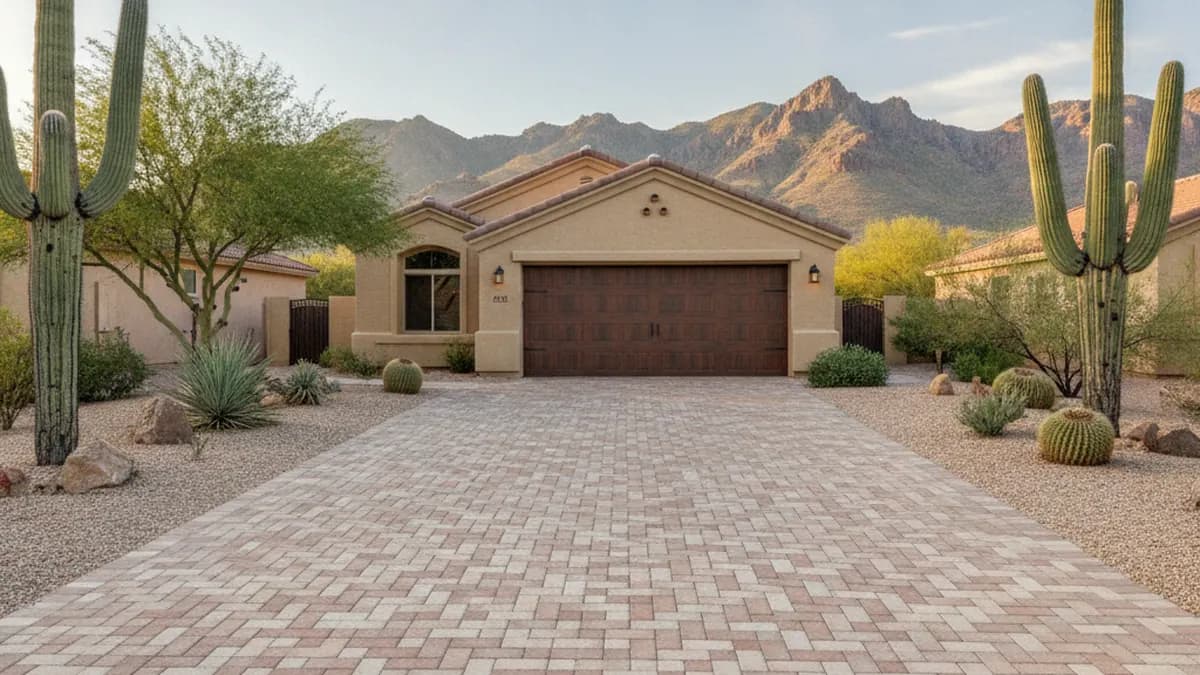
Queen Creek still feels like the edge of the Valley in a lot of places. Drive a few minutes and you pass Schnepf Farms, Queen Creek Olive Mill, citrus groves and open fields next to brand new rooftops. That rural character is a big reason people move here, and it also explains why exterior surfaces in Queen Creek get dirty in their own particular way.
Whether you live in Hastings Farms, Church Farm, Harvest Queen Creek or one of the golf course homes in Encanterra, this guide walks through what the local conditions do to driveways, pavers and bins, how town services work, and how to plan cleaning around the seasons.
A town built between fields and foothills
Queen Creek sits on the southeast edge of the Valley, with the San Tan Mountains to the south and agricultural land still active in and around town. Neighborhoods built near fields and dirt roads pick up much more airborne soil than an infill home in central Mesa. Tilling, harvest and plain afternoon wind all move fine dirt that settles on driveways and patio furniture.
Housing here ranges from acre lots with horse setups to dense new tract communities and resort style developments like Encanterra, which is built around a golf course. Larger lots tend to have long driveways, RV gates and extra concrete pads. Newer subdivisions lean on pavers for entries, courtyards and back patios. Both styles hold dust and show stains quickly.
Pavers are everywhere, and they need different care
Many Queen Creek homes, especially in newer subdivisions, use concrete pavers on driveways and patios. Pavers are durable but they are not a slab. The sand in the joints is part of the structure, so blasting it out with high pressure loosens the stones over time and invites weeds and ants.
A proper paver cleaning usually means a lower pressure wash with a surface cleaner, targeted treatment for oil, rust and organic stains, and fresh joint sand afterward. Some homeowners add a sealer, which can deepen color and slow down future staining. If your pavers have a white haze, it may be efflorescence (minerals rising from inside the paver) or hard water from sprinklers, and those two respond to different products.
Poured concrete driveways on larger lots have their own issue: trailers, tractors and work trucks leave heavy tire marks and fluid drips. Those spots usually need a degreaser and hot water to lift cleanly.
Weather that works against clean concrete
Queen Creek gets the same desert pattern as the rest of the Valley, with summer highs regularly over 105 degrees and a monsoon season running from mid June through September. When a dust storm rolls across open farmland before reaching the neighborhoods, it carries a lot of material. The rain that sometimes follows paints that dust onto walls, garage doors and driveways in muddy streaks.
After the storms, intense sun bakes the residue in place. Hard water from irrigation adds mineral rings along the edges of planters and walkways. Left alone for a season or two, these layers stack up and the hardscape starts to look years older than it is.
The good news is that winter in Queen Creek is mild and dry, which gives homeowners a long, comfortable window for exterior cleaning between late October and early April.
Town trash service and keeping bins fresh
The Town of Queen Creek provides weekly curbside pickup of trash and recycling in two separate carts for most residents. Some communities have historically used their own private hauler contracts, so if you live in a gated or golf community, confirm your service through your HOA. The town website is the best source for your pickup day and holiday changes.
Weekly pickup keeps trash moving, but it does nothing for the inside of the cart. In summer, food residue and liquids cook in a closed plastic bin sitting in the sun, which draws flies and creates the kind of smell you notice from the driveway. Families with kids, pets or backyard livestock tend to fill bins with heavier, messier waste, which makes regular bin cleaning especially worthwhile here.
A good routine is to rinse and sanitize bins right after pickup day, while they are empty, and to keep them in shade when possible.
Seasonal plan for a Queen Creek property
Fall (October and November): the best time for a full exterior clean. Monsoon dust and mud come off, pavers can be re sanded and sealed in cooler weather, and the house looks its best for holiday visitors and the busy season at local farms and events.
Winter (December through February): touch ups and walls. This is also a good time to clean RV pads, side yards and block walls, since you can work in comfort through the middle of the day.
Spring (March and April): a second driveway and patio clean for homes on dusty lots, plus bin cleaning before heat arrives. Summer (May through September): focus on bins and quick rinses, and schedule any bigger jobs early in the morning or in the evening.
What to ask before you hire someone
Ask whether they clean pavers with low pressure and re sand afterward, how they handle oil stains, and what they do about runoff, since rinse water goes into the street and storm drains rather than a treatment plant. Ask what time of day they work in summer, because cleaning products behave poorly on scorching concrete.
On cost, driveway cleaning in the East Valley typically ranges from roughly $100 to $250, and paver cleaning with sanding and sealing usually costs more because of the extra steps and material. Any honest provider will want to see the property or photos before giving you a firm number.
Getting it done in Queen Creek
Splash N StyLin is a local business based next door in San Tan Valley, owned by Will Cortes, and it serves Queen Creek homes with pressure washing, driveway and paver cleaning, trash bin cleaning and mobile car washing. The business is open 24 hours, which makes it easy to schedule work in the cool early morning or evening hours.
Call or text (520) 371-8081 for a free estimate, or visit the Queen Creek pressure washing page to see how the service works.
Frequently asked questions
- Does the Town of Queen Creek pick up trash every week?
- Most Queen Creek residents receive weekly curbside collection of trash and recycling in two separate carts. Some HOA communities have used private hauler contracts, so check with your HOA or the town if you are not sure who serves your home.
- Will pressure washing damage my pavers?
- High pressure aimed directly at joints can wash out the sand and loosen pavers. A proper paver cleaning uses lower pressure with a surface cleaner and finishes with fresh joint sand, and sealing is an optional final step.
- Why is my Queen Creek driveway so dusty all the time?
- Many Queen Creek neighborhoods sit next to farmland, dirt roads and open lots, and wind moves that soil onto nearby homes. Monsoon storms make it worse by turning the dust into mud that bakes onto concrete.
- What is the best month to pressure wash in Queen Creek?
- October and November are ideal because the monsoon is over and temperatures are comfortable. Late February through early April is the second best window before the summer heat returns.
Serving
Found this helpful? Make us a preferred source on Google.
Ready for an exact price?
Get a free, no-pressure in-home estimate. Real numbers for your home, not a phone guess.