
How Often Should You Pressure Wash Your Home in Arizona's Desert Climate?
· By Will Cortes
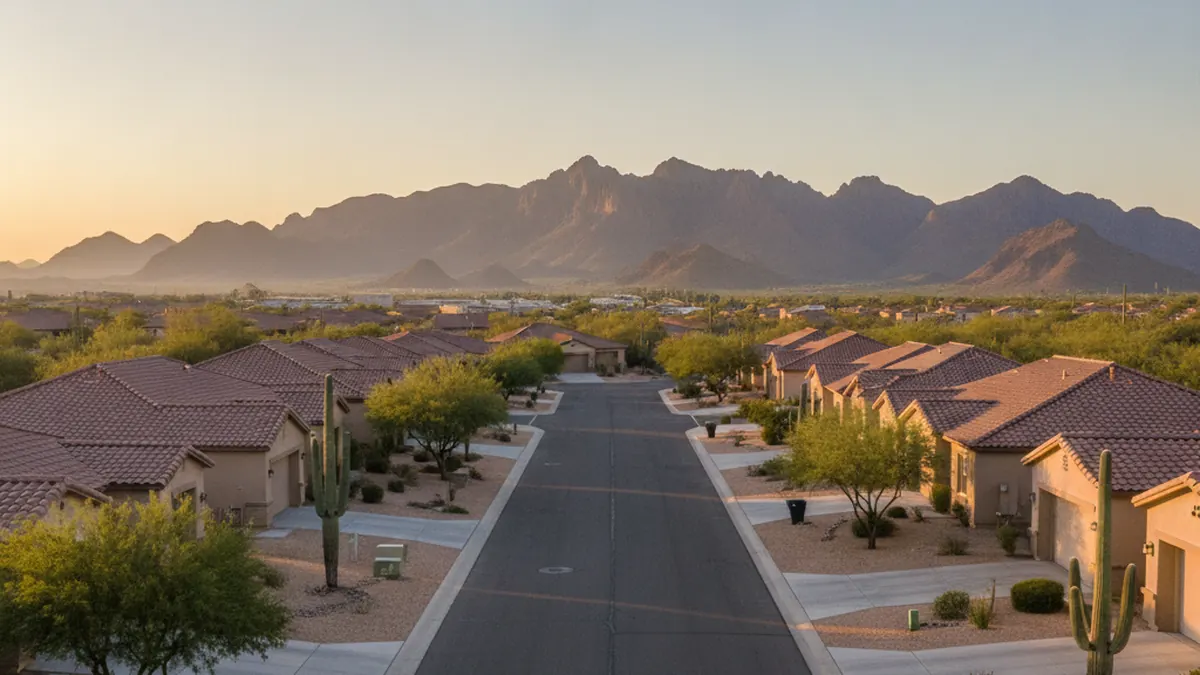
In wetter parts of the country, homeowners pressure wash to fight mold, moss and mildew. In Arizona the enemies are different: fine desert dust, monsoon mud, sprinkler overspray full of minerals, and sun that bakes stains into concrete. That changes how often each part of your property really needs attention.
The short answer for most East Valley homes is once a year for the full exterior and once or twice a year for driveways and patios. The longer answer depends on where you live, how your home is built, and how much traffic your outdoor spaces get. Here is how to build a schedule that makes sense.
The baseline schedule for most Arizona homes
House exterior (stucco, block walls, trim, eaves): once a year is enough for most homes. Stucco holds dust in its texture, and a gentle annual wash keeps the color even and stops dirt lines from forming under eaves and around windows.
Driveway and front walkway: once or twice a year. Driveways collect oil drips, tire marks and dirt tracked in from the street. Cleaning them in spring and again after monsoon season keeps stains from setting in.
Back patio and pool deck: two times a year for most families, and more often if you entertain frequently, have pets, or deal with pool chemical splash and hard water rings.
Pavers: a cleaning every year, with re-sanding and sealing roughly every two to three years depending on traffic and product used. Sealing helps pavers shed dirt and stains between cleanings.
Why Arizona homes get dirty differently
Dust is constant here. Wind carries fine particles from open desert, farm fields and construction sites, and it settles on every horizontal surface. In fast-growing areas like San Tan Valley and Queen Creek, nearby construction can make the problem noticeably worse.
Hard water is the second factor. Many East Valley water sources are high in calcium and magnesium. Every time sprinklers hit a wall, driveway or paver, they leave a thin layer of minerals behind. Over months that becomes white crusty rings and streaks that a garden hose cannot remove.
Sun intensity matters too. UV and surface heat bake oil and organic stains deeper into porous concrete, so a fresh drip is far easier to remove than one that has sat through a summer.
Plan around monsoon season
Monsoon season, roughly mid-June through September, brings dust storms, heavy rain and runoff that carries mud across driveways and into paver joints. Cleaning right before monsoon is usually wasted effort, because the first big storm undoes it.
For that reason, many Arizona homeowners schedule their main cleaning in early fall, once the storms have passed, and a lighter spring cleaning before summer gatherings. Fall cleaning also gets your home looking its best for the cooler months when you spend more time outside and host the holidays.
Signs you need to clean sooner
A fixed schedule is a starting point, not a rule. Clean sooner if you notice dark tire tracks or oil spots on the driveway, white mineral rings near sprinklers, green or black discoloration in shaded corners, red mud lines along the base of walls after a storm, or paver joints that look empty or weedy.
An HOA notice is another clear trigger. Many communities in Gilbert, Chandler and the San Tan Valley area include stained driveways and dirty entries in their appearance rules, and it is simpler to stay ahead of a violation than to rush once one arrives.
Factors that change your ideal frequency
Homes next to open desert or active construction may need more frequent washing. Properties with lots of shade, misting systems or drip irrigation near hardscape can develop algae and mineral buildup faster. Households with several vehicles, RVs or trailers usually see more oil and tire staining on the driveway.
If you plan to sell, a pre-listing wash is worth it regardless of your normal schedule. Clean concrete and bright stucco photograph better and make a strong first impression on buyers walking up to the door.
Can pressure washing too often cause damage?
Done correctly, regular cleaning does not hurt concrete, pavers or stucco. Problems come from the wrong pressure or nozzle, not from frequency. Stucco and painted surfaces are usually cleaned with low pressure and a detergent so the finish is not eroded, while concrete can handle a surface cleaner at higher pressure.
Pavers are the most sensitive, since aggressive spraying can wash out joint sand. That is why paver cleaning is often followed by re-sanding, and why a professional approach makes sense for those areas.
Easy maintenance between professional cleanings
Wipe up fresh oil drips with cat litter or an absorbent pad as soon as you see them. Adjust sprinklers so they water plants instead of walls and walkways. Sweep or blow off dust and debris weekly, especially after storms. These small habits stretch the time between deep cleanings.
When it is time for a full cleaning, Splash N StyLin serves homes across San Tan Valley and the East Valley. Call or text (520) 371-8081 for a free estimate and a schedule that fits your property.
Frequently asked questions
- How often should I pressure wash my house in Arizona?
- Most Arizona homes do well with one exterior wash per year. Homes near open desert, construction or heavy sprinkler overspray may benefit from cleaning twice a year.
- What is the best time of year to pressure wash in Arizona?
- Early fall, after monsoon season ends, is usually the best time for a main cleaning. Spring is a good time for a lighter touch-up before summer.
- How often should a driveway be cleaned in Arizona?
- Once or twice a year for most homes. Cleaning more often makes sense if you have several vehicles, frequent oil drips or HOA appearance requirements.
- Does hard water affect how often I need to clean?
- Yes. Sprinkler overspray with hard water leaves mineral rings on walls, concrete and pavers. Fixing sprinkler aim and cleaning regularly keeps buildup from becoming stubborn.
- Is pressure washing safe for stucco?
- Yes, when done at low pressure with a proper detergent. High pressure can erode the stucco finish, so gentle washing is the standard approach.
Found this helpful? Make us a preferred source on Google.
Ready for an exact price?
Get a free, no-pressure in-home estimate. Real numbers for your home, not a phone guess.